
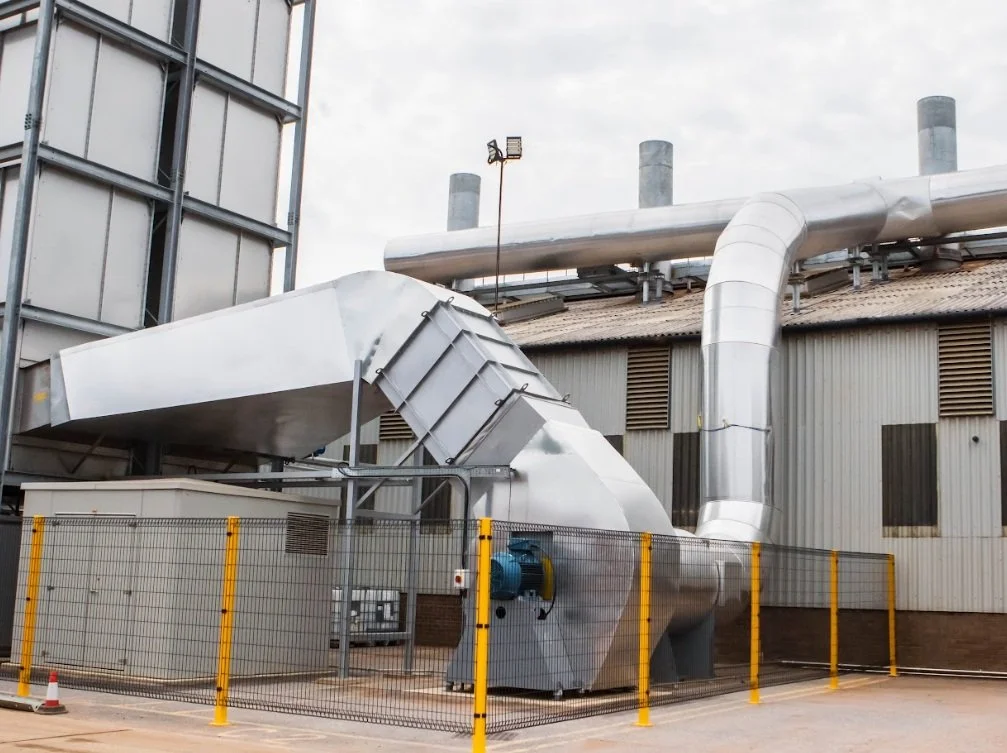
New installation at wienerberger’s Warnham brickworks captures waste heat and deploys it to a high temperature heat pump system in a first for the industry in the UK.
A decarbonisation project commissioned by waste heat experts Heatcatcher at the wienerberger brickworks in Warnham has become an industry first, using a high temperature heat pump system to capture and deploy waste heat in the process of drying clay bricks.
Heatcatcher identifies and quantifies the waste heat within manufacturing processes, applying technology to significantly reduce energy and carbon emissions. The company was contracted by wienerberger - the world’s largest producer of bricks, paving blocks and roof tiles – to design a system that would help decarbonise operations at its Warnham brickworks, which manufactures around 150,000 tonnes of bricks per year.
The production process involves pressing of clay mixed with water into moulded bricks which are then dried in heated chambers before firing in the kiln. The Warnham site has 7 large drying chambers, heated by recovered heat from the kiln and natural gas fired burners. As the bricks are dried the heat and water vapour is exhausted from the chamber stacks to the environment, a loss of heat and water.
As part of wienerberger’s commitment to decarbonise their operations, a funding grant was awarded by DESNZ (Department for Energy Security and Net Zero) under the Industrial Energy Transformation Fund. This facilitated a project to recover the heat and water from the 7 chamber stacks to a heat recovery tower, condensing the hot water to supply to a heat pump system powered by zero carbon electricity.
Darren Bryant, CEO at Heatcatcher, said: “The system design is the first of its kind in the UK for a drying process at a brickworks. Working with the wienerberger team at Warnham made the design and delivery of the project a real success and we are excited about the future water, natural gas and carbon emissions savings achievable by wienerberger following the system’s commissioning.”
Keith Jackson, Head of Thermal Process and Projects at wienerberger, said: “This project has demonstrated the benefit of installing heat pumps in factories where significant energy and water is lost from the brick drying process. The significant reductions in CO2 emissions represent a positive step towards achieving the ambitious CO2 reduction targets wienerberger has set itself across its building solutions business.”
Greg Crownshaw, Project Manager, Major Projects and Energy at wienerberger, said: “wienerberger and Heatcatcher have worked together very successfully on this project to deliver a novel solution for heat recovery from a previously untapped “low grade” resource. A challenging installation in an existing factory whist operational, was completed by great communication and collaboration with the site team from day one. Not only have we gained significant decarbonisation benefits but we have also gained water recovery benefits and improved the turnaround time of the dryers by improved chamber flows.”
How does the waste heat conversion work?
The heat pump system supplies high temperature hot water to a heating system installed in the seven drying chambers, which offsets the heating provided by natural gas burners. The excess condensed water recovered by the tower is recovered back to mix with the clay to mould the bricks, significantly reducing water usage at the site.
- The heating of the drying chambers and different stages in the drying cycle are preheated by 2 x 1.3 MWth high temperature water sourced heat pumps supplying hot water up to a maximum of 90ºC.
- The drying chambers were modified to include a ceiling plenum chamber fitted with a network of hot water heat exchangers heating the circulating air in the chambers to the required control temperature.